
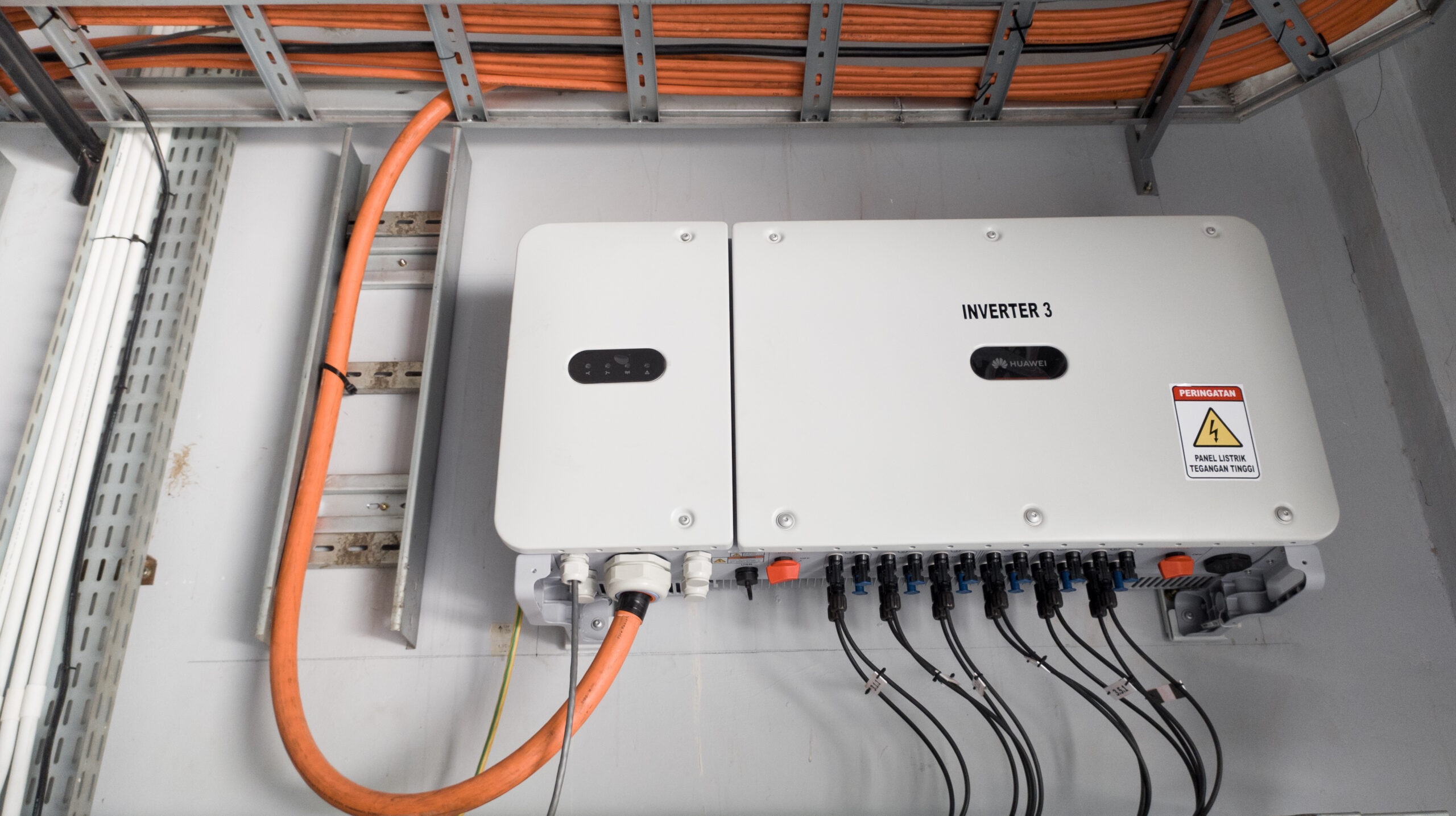
You did not pick the inverter. It was specified by the project owner, it is approved in the interconnection agreement, and it has been in the procurement plan since the contract was signed.
In 2026, that became something worth checking.
New federal rules have made a category of inverters unavailable for future orders. Nothing already installed is affected, and most projects in construction right now will finish on the equipment they specified. But some will not, and the ones that get hurt will be the ones that find out late.
The 60-second version
Every piece of electronics sold in the United States needs an FCC rating certifying its electromagnetic emissions. No rating, no legal sale. It is normally a manufacturer’s paperwork item that nobody on a job site ever thinks about.
In late July, the federal government used that rating as a lever. Inverters built overseas, above a defined foreign-content threshold, and capable of remote communication were made ineligible for new ratings. The scope was revised again three weeks later, and it got broader.
What that means in practice:
- Equipment already installed keeps running. There is no retrofit and no retirement requirement.
- Models already rated can still be bought and sold. Most current projects are fine.
- New models cannot get rated. And here is the one that catches people: the next hardware revision of a model you are using counts as a new model. The unit you specified in 2025 may quietly stop being built.
So this is not a story about equipment being ripped out. It is a story about a substitution landing on your project at the worst possible time.
Why a substitution is your problem
On paper, swapping one inverter for a comparable one looks like a submittal exercise. It is not. It moves through the job in ways that show up on your schedule and in your change order log.
- The drawings get reissued and re-stamped. Electrical design keys off the specific unit — output current, DC input voltage window, string limits, conductor and overcurrent sizing. That is engineering time, and the revised sheets need a seal.
- Work already in the ground may not fit. Footprint, weight, clearances, and thermal requirements vary by manufacturer. Pads, racking, conduit runs, and cable pulls done to the old unit can need rework.
- Studies have to be redone. Short circuit, coordination, and arc flash results are equipment-specific. Those feed your commissioning package and your turnover documents.
- The utility may treat it as a material modification. This is the expensive one. The interconnection agreement names a model number. Change it and the utility can require a re-study, which in a bad case puts the project back in the queue. Your engineering redesign takes weeks. A re-study takes months, and it is entirely outside your control.
That last item is the reason this belongs on your risk register rather than in a submittal folder. The redesign is not the long pole. The utility is.
Three questions to ask this week
1. Ask the owner or developer to confirm the equipment in writing
You want confirmation that the specific inverter model and hardware revision shown on the IFC set holds a current FCC authorization, and that the manufacturer is not planning a revision before your delivery date. Model number alone is not enough — ask about the hardware revision, because that is where the exposure sits.
2. Ask supply chain what is actually on order
PO status, confirmed delivery dates, and whether the manufacturer has flagged any change to the model. If units are staged or in transit, you are in good shape. If the order is still open for a later phase, that phase is where you should be looking.
3. Ask your contracts lead who carries this
Is the inverter owner-furnished or contractor-furnished? And does your change-in-law language reach a regulatory change that makes specified equipment unavailable? A forced substitution can be a legitimate basis for a time extension and cost relief, or it can land entirely on you, and the difference is in the contract. That is a conversation for your contracts and legal team, not something to settle from a job trailer — but it is worth starting before you need the answer, not after.
If a substitution is coming, front-load it
The instinct is to wait until the replacement equipment is confirmed before engaging engineering. On this particular problem, that instinct costs you the thing you have least of.
The moment a substitution looks likely, the useful move is to get the design implications scoped and the material modification question in front of the utility while you still have float. Knowing in week two that a candidate replacement triggers a re-study is recoverable. Finding out in week ten is a delay claim.
Where McCalmont Engineering fits
We are a solar, storage, and EV charging engineering firm, and this is the kind of work we get called into: an equipment change lands mid-design and the owner needs the redesign, revised studies, and the re-stamped sheets turned around without wrecking the schedule.
Our projects are designed by senior engineers, which matters most on exactly this kind of problem — you are not waiting on a junior team to come up the learning curve on your critical path. If you are looking at a possible inverter change, an early conversation about what it touches is usually the cheapest hour you will spend on it.
The bottom line
Most projects will not have to deal with this. The ones that do will split into two groups: the teams that checked their equipment early and had options, and the teams that found out when equipment was not available or FCC approved and consequently, a delivery date moved.
Checking costs you a few emails. Not checking costs you the float you were counting on in Q4.
Sources
- FCC Public Safety and Homeland Security Bureau, Public Notice DA 26-786, July 28, 2026.
- Stoel Rives LLP, It Happened: FCC Adds Foreign-Produced Power Inverters to the Covered List.
- Norton Rose Fulbright, Project Finance NewsWire, Updated Foreign Inverter Ban.