
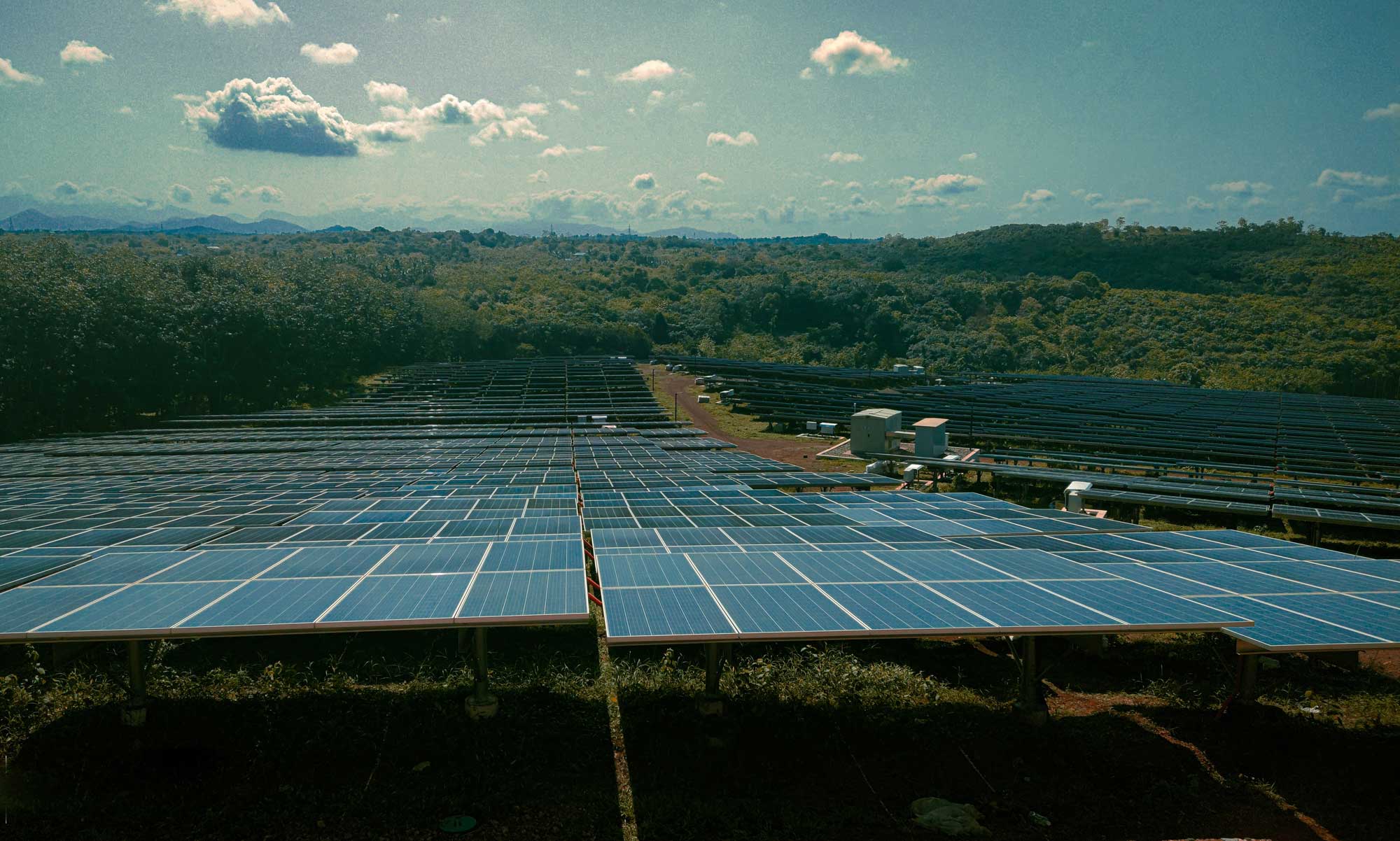
In clean energy, smarter engineering does not just improve the design. It improves the investment.
The Hidden Cost Decisions Inside Every Solar Project
When most people think about solar project costs, they think about panels, inverters, batteries, racking, permitting, and installation.
But some of the most important financial decisions in a solar project happen much deeper in the design.
One example: cable sizing.
That may sound like a small technical detail, but in a large commercial or utility-scale solar project, the conductors that carry power from the solar array to the inverter can have a meaningful impact on both upfront cost and long-term energy production.
If the cables are too small, the system loses more energy over time.
If the cables are too large, the project spends more money than necessary on materials and installation.
The best design is not always the biggest cable. It is the cable size that delivers the best economic outcome over the life of the system.
That is the kind of engineering detail that can make or break the financial performance of a solar project.
Why “Rules of Thumb” Are Not Enough
In electrical design, many decisions are made using common rules of thumb. One familiar example is designing around a maximum allowable voltage drop.
For some traditional electrical systems, those rules make sense. Motors, lighting, and industrial equipment may not perform well if voltage drops too far below expectations.
Solar projects are different.
Solar inverters are designed to operate across a range of input voltages. That means a simple voltage-drop rule does not always tell the full economic story.
A solar project should not automatically spend more money on larger conductors just because an old rule of thumb says to minimize voltage drop. The better question is:
Will the added cost of larger cable be paid back through the value of the extra energy saved over the life of the system?
That is a financial question as much as an engineering question.
The Real Goal: Lowest Lifetime Cost
In a solar project, conductor sizing involves two competing costs.
First, there is the cost of the cable itself. Larger cable costs more.
Second, there is the cost of energy lost through resistance. Smaller cable loses more energy over time.
The goal is to find the balance point where the project is not wasting money in either direction.
Spend too little on cable, and you lose too much energy.
Spend too much on cable, and you overbuild the system without getting enough financial benefit back.
The right design finds the lowest lifetime cost.
This is where experienced solar engineering matters. The best answer depends on project-specific details, including equipment, site conditions, energy production, conductor material, labor costs, and the value of the electricity being generated.
One Surprising Finding: Longer Cable Does Not Always Mean Bigger Cable
One of the most interesting conclusions from McCalmont Engineering’s technical analysis is that the optimal cable size is not simply based on cable length.
That may feel counterintuitive.
Most people assume that a longer cable run automatically requires a larger cable to reduce voltage drop. But when you analyze the economics over the life of the solar plant, the answer is more nuanced.
A longer cable run may have more voltage drop, but it also costs more to upsize. The economic tradeoff has to be analyzed carefully.
The key lesson is simple:
Solar design should not be based only on assumptions. It should be based on project-specific modeling and long-term financial analysis.
Why Utility Rates Matter
The value of the energy produced by a solar project also affects design decisions.
If the electricity generated by a solar system is very valuable, then reducing energy losses may justify spending more on larger conductors.
If the value of that energy is lower, then the project may not benefit enough from upsizing the cable.
This is why tariff analysis matters.
A high-quality solar design should consider not only how much energy the system can produce, but also what that energy is worth. Utility rates, demand charges, time-of-use pricing, and long-term project economics should all inform the engineering.
At McCalmont Engineering, this type of thinking is central to how we approach solar, storage, microgrid, and EV charging infrastructure design.
Better Engineering Creates Better Financial Outcomes
The takeaway is not that every project needs complicated math for every wire.
The takeaway is that thoughtful engineering creates better projects.
A solar design that simply meets code may still leave money on the table. A design that blindly overbuilds may waste capital. A design that follows outdated assumptions may miss opportunities to improve the project’s return.
The right engineering partner looks at the whole picture:
- System performance
- Equipment selection
- Construction cost
- Utility rates
- Energy losses
- Long-term operations
- Maintenance requirements
- Future expansion
- Overall return on investment
That is where McCalmont Engineering brings value.
We do not just design solar systems that work. We design solar systems that are practical, cost-effective, and optimized for real-world performance.
Solar Projects Are Long-Term Assets
Commercial and utility-scale solar projects are expected to operate for decades. Small design choices made at the beginning of a project can affect performance, cost, and revenue for 20 to 30 years.
That is why early engineering decisions matter so much.
The right design can reduce unnecessary construction costs, improve energy production, simplify installation, and support stronger financial performance over the life of the system.
The wrong design can create avoidable losses that compound year after year.
When you are investing in solar, battery storage, EV charging, or microgrid infrastructure, the design phase is not just a technical step. It is where the economics of the project are shaped.
The McCalmont Engineering Difference
McCalmont Engineering has been helping clients design successful solar and clean energy projects since 2009. Our team understands that every project is different, and that the best solution is not always the most obvious one.
We bring deep technical expertise to solar PV, battery energy storage, microgrids, and EV charging infrastructure. But just as importantly, we bring a practical focus on cost, constructability, performance, and long-term value.
Our job is to help clients make better decisions before equipment is purchased, trenches are dug, or construction begins.
Because in clean energy, smarter engineering does not just improve the design.
It improves the investment.
Planning a Solar, Storage, Microgrid, or EV Charging Project?
McCalmont Engineering can help you evaluate your project from the earliest planning stages through detailed design and implementation.
Whether you are developing a commercial solar array, adding battery storage, expanding EV charging, or planning a more resilient energy system, our team can help you design it smarter from the start.
Before you build, make sure the engineering is working as hard as the equipment.